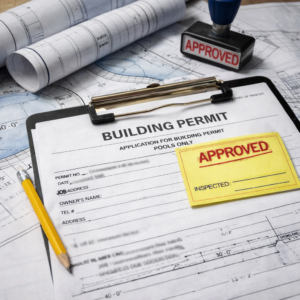
Adding a swimming pool to your backyard is one of the best ways to enhance your home and outdoor living space. But before construction begins, there’s an important step every homeowner should understand: pool permits and local regulations.
In Texas, pool permit requirements are handled at the city level rather than the state level. That means the rules can vary depending on where you live. If you’re planning to build a pool in the Dallas–Fort Worth Metroplex, understanding your local city’s requirements is essential to keeping your project on schedule and compliant with building codes.
This guide will explain how pool permits work in Texas and what homeowners in cities like Dallas, Plano, Frisco, Allen, and Irving should expect.
Are Pool Permits Required in Texas?
Yes. In most Texas cities, permits are required for both in-ground and above-ground swimming pools.
Although Texas does not enforce a statewide permit specifically for residential pools, local municipalities adopt building codes designed to ensure safe construction. These regulations help verify that pools meet requirements for:
Structural safety
Electrical bonding and grounding
Plumbing and drainage
Property setbacks
Safety barriers such as fences and self-closing gates
Failing to obtain the proper permits can result in fines, stop-work orders, or complications when selling your home.
Pool Permit Requirements in the Dallas Metroplex
While the general process is similar across North Texas, each city has its own specific rules and documentation requirements.
Below is an overview of permit expectations in several Dallas-area cities.
Dallas, Texas
Homeowners in Dallas must obtain a permit before constructing a swimming pool.
Permit applications generally require:
Detailed pool construction plans
Property survey showing the pool location
Drainage information
Electrical and plumbing layouts
Safety barrier specifications
During construction, the city typically performs multiple inspections to verify that the pool meets local building and safety codes.
Plano, Texas
Plano requires permits for residential pools and has a detailed approval process focused on safety and compliance.
Typical permit requirements include:
Pool construction drawings
Engineering or design details
Safety barrier and fencing information
Electrical bonding details
City inspectors conduct inspections throughout the construction process to ensure compliance.
Frisco, Texas
Frisco requires permits for residential swimming pools and may request additional documentation compared to surrounding cities.
Homeowners or builders may need to submit:
A property survey
Pool design plans
Drainage documentation
Safety barrier information
As with most municipalities, inspections are conducted during different stages of construction.
Allen, Texas
Allen requires permits for both in-ground and above-ground pools.
Permit applications typically include:
Construction plans
Electrical and plumbing details
Safety fencing and gate specifications
Allen places particular emphasis on safety barriers, and final inspections are required before the pool can be used.
Irving, Texas
Irving also enforces detailed permit requirements for residential pools.
Applications generally require:
Pool construction drawings
Drainage information
Safety fencing and barrier details
Inspections are conducted during construction to ensure the project meets the city’s building codes.
Why Pool Permits Matter
Pool permits are designed to protect homeowners, families, and neighbors by ensuring safe construction.
The permit process helps verify:
Electrical safety and bonding
Structural integrity of the pool shell
Proper drainage and plumbing systems
Safe access barriers for children and pets
Compliance with zoning and property setbacks
Completing the permit process also helps avoid potential issues during home inspections or property sales in the future.
Tips for Navigating the Pool Permit Process
If you’re planning to build a pool in the Dallas Metroplex, these tips can help streamline the process:
1. Contact your local building department early
Permit requirements vary by city, so verifying regulations in advance is important.
2. Work with an experienced pool builder
Builders familiar with local permitting processes can help avoid delays and ensure compliance.
3. Make sure documentation is accurate
Cities typically require surveys, construction plans, and drainage information before approving permits.
4. Plan for inspections during construction
Most cities require inspections for electrical, plumbing, structural components, and final approval.
Final Thoughts
Building a pool in Texas can transform your backyard into a personal oasis. However, every city in the Dallas Metroplex has its own permit requirements, safety regulations, and inspection procedures.
Before starting construction, homeowners should review their local city’s requirements or work with a knowledgeable pool builder who understands the permitting process.
Taking the time to follow these guidelines ensures your pool project is completed safely, legally, and without unnecessary delays.